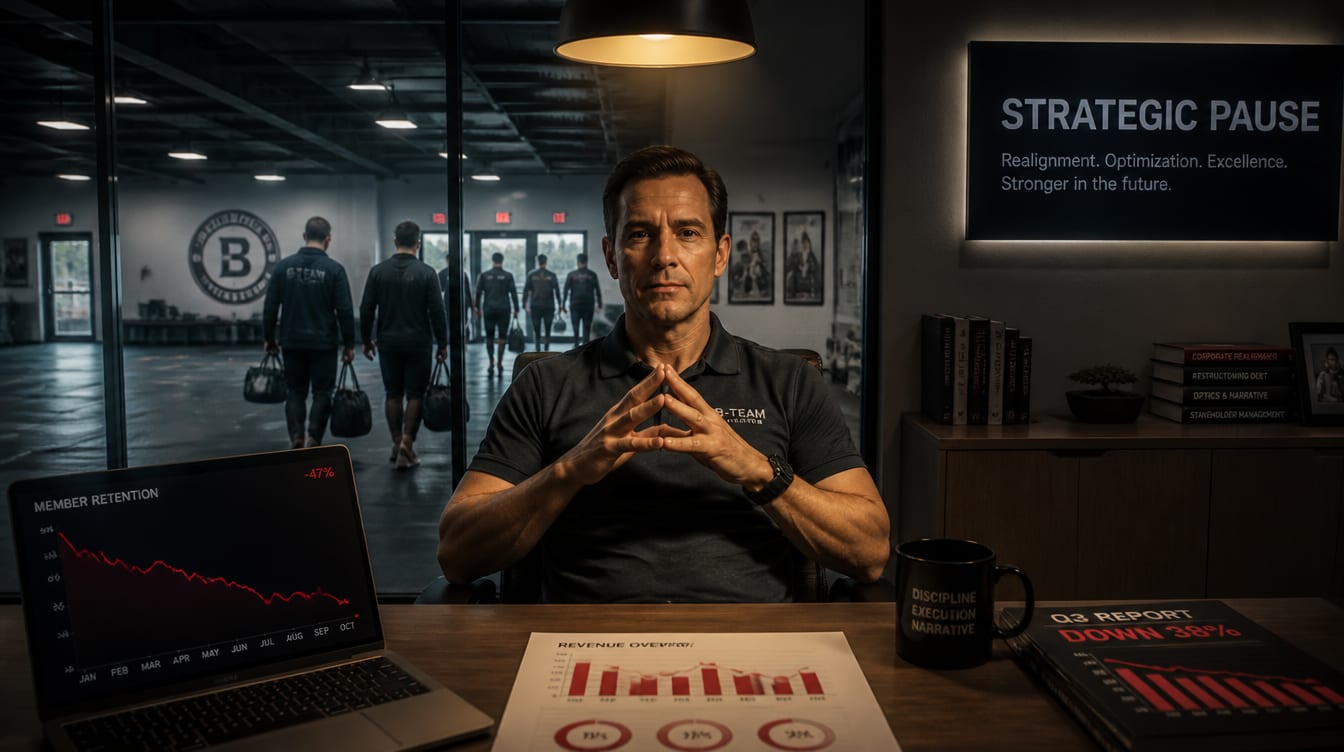
Sentinel Grappling International, based in suburban Denver and operating for three years, announced Tuesday that it would postpone its August and September event series to "align with current athlete availability and market dynamics." The announcement came four days after the promotion's three most competitive athletes—all signed to exclusive $4,000–$6,000-per-event contracts—departed for rival gyms, a newly funded AI startup, and one person's private coaching practice. Sentinel's founder and CEO Derek Matheson did not specify when events would resume, or explain what "athlete availability" meant. Every athlete had made themselves available to everyone. Except him. "It's not a cancellation," Matheson said in a statement to staff, which was leaked to Discord by Kevin, a part-time social media coordinator. "It's a strategic alignment with where the athlete community is right now. We're being responsive to the reality on the ground. Very mature, very professional." The reality on the ground was this: Bryce Pellman, 28, an elite heavyweight who had won two consecutive Sentinel tournaments, signed a five-year deal with ADCC's São Paulo training facility—the same facility his main rival trained at. Renata Okonkwo, 26, a black belt middleweight and Sentinel's Instagram marquee, quit mid-contract and opened a private coaching business in Austin, Texas, charging $150 per hour. She had been making $5,000 per month at Sentinel, all tournament-dependent, which meant roughly $625 per hour worked once you accounted for travel, weight-cutting, and promotional obligations. Marcus Chen, 31, the promotion's reigning heavyweight champion for two years, discovered that Grappling.ai—a newly funded AI analytics startup backed by two VC firms—would pay him $8,000 per month to be a "technique model" and training partner. Three days of light rolling per week. No contracts, no weight cuts, no promotional interviews, no losses to the algorithm's record. All three had signed Sentinel's exclusive representation agreements in January, when Matheson claimed the promotion had $600,000 in venture funding and a five-year runway. By July, the runway had stopped. Matheson's August signature event was supposed to feature Pellman vs. Okonkwo for the "Women's Heavy Absolute Championship"—a title that existed only in the announcement and one PowerPoint deck. Registration: $129 per competitor. Seventeen athletes signed up. Seventeen. Okonkwo departed during the promotional window, and Matheson sent her three follow-up emails with escalating incentives: $7,500, then $10,000, then "name your price and let's figure out the math." Okonkwo replied once, on July 30: "thanks but i'm done with tournaments for a bit." By then, Matheson had already commissioned a $3,200 rebrand. New logo, website, new tagline: "Where Champions Align." Launching with the mega-event. The website went live July 15. By Tuesday afternoon, Matheson had manually deleted the event page from his Starbucks laptop. The annual hosting renewal had already charged his card (non-refundable). Kevin noticed the deletion over Slack and later reported: "He just clicked delete. The whole thing was gone. But he forgot to delete the footer. It still said 'Upcoming: Women's Heavy Absolute, August 17th.' So when you scrolled to the bottom, there was this message from the past." The Three Departures, as Kevin called them in the Discord server, happened over a single week: — July 22: Pellman boarded a plane to São Paulo with a signed five-year contract, a $2,000-per-month housing stipend, and zero expectation to compete in Sentinel events. — July 25: Okonkwo sent her resignation email to Matheson at 7 p.m. (he read it at 8:47 p.m., took 45 minutes to reply with "We need to talk about this," to which Okonkwo sent back a GIF of someone closing a door). — July 28: Chen sent an email titled "Opportunity" that was actually a contract offer from Grappling.ai with a start date of August 1. He started August 2 instead, after a two-day vacation. Matheson called him three times. Chen did not answer. By Tuesday, three of Sentinel's five staff members had updated their LinkedIn profiles. One removed "Sentinel Grappling International" from her employment history entirely. Another added the phrase "currently exploring new opportunities in sports management." The third—Kevin—simply wrote "Available for hire" and left it at that. Pellman, already in São Paulo, texted the Sentinel WhatsApp group: "Good luck with the regrouping. This has been fun." He muted it right after. Okonkwo did not acknowledge the strategic-pause announcement. She simply reposted her Austin coaching studio photos to Instagram with the caption: "New season. Same standards. DM for availability." Chen replied to the announcement in the group chat with a single prayer-hands emoji, the words "I'm gonna go train," and then left the group. Matheson's statement ended with: "We remain committed to the Sentinel vision. Athletes will eventually want structure again. We're confident they'll come back when they realize the startup ecosystem isn't sustainable. The human element matters. Community matters." The startup CEO had guaranteed Chen's salary for five years. Pellman's São Paulo housing stipend came with a performance bonus structure. Okonkwo, having quit grappling entirely, was now making 30% more per hour than she'd made per month at Sentinel, working 60% fewer hours. None of them had indicated interest in returning. Matheson sent a follow-up email, cc'd only to current and former staff, with the subject line "Q4 Recovery Plan (Preliminary)." The body stated: "The strategic pause will last until athlete roster recovery is feasible. We're exploring a spring 2027 event calendar, pending capital infusion and LOI agreements with our key roster items." "Roster items," Kevin texted the Discord server. "He called them roster items." When asked via email whether Sentinel would pay the outstanding appearance fees owed to the three athletes for June's cancelled event ($6,000 total, $2,000 each), Matheson replied: "Payment is contingent on the outcome of some accounting adjustments we're making. We're evaluating the total commitment structure in light of mutual contract termination language." None of the three athletes had terminated their contracts. Matheson had simply stopped paying them. By Wednesday morning, Kevin had accepted a job at a rival promotion's Denver satellite office. They offered him $18 per hour, full benefits, and a promotion to "Social Media and Event Coordinator." His starting date was Monday. He gave Matheson two weeks' notice via email, then realized he didn't need to—there were no events to coordinate anyway. He came in on his second-to-last day and packed his laptop into a canvas bag. The Sentinel website still advertised the "Women's Heavy Absolute Championship" in the footer.
THEPORRA · PURE SATIRE Wed, Aug 5, 2026, 10:42 AM ET
Grappling Promotion's 'Strategic Pause' After Athlete Exodus
Grappling promotion postpones events after athletes depart for better pay and training. How gyms spin athlete exodus as 'market alignment'.